


Artistic Documentation: In Search of Truth or the Creation of a New Reality?
Does artistic documentation serve as a window to truth, or does the artist's inevitable bias reshape reality into a new creation?
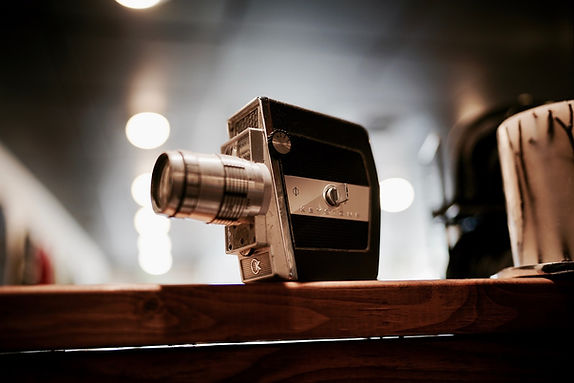
We are all familiar with the saying that "the camera never lies." But if we pause and reflect a little deeper, we realize that this phrase might be one of the most optimistic oversimplifications of our time. The camera itself may not lie, but the person behind it is constantly making choices: selecting a subject, framing a shot, choosing a moment, and shaping a narrative. These choices, much like a historian sifting through thousands of documents, are steeped in "bias." The question, then, is this: in the realm of art, does this bias constitute a "betrayal" of the truth of the work, or is it an inseparable part of the artist's "mission" to reinterpret reality?
This question runs like a common thread through all artistic disciplines that engage with documentation, from documentary film and photojournalism to the recording of live performances and the capture of soundscapes. In every one of these fields, the artist faces a fundamental paradox: on one hand, they are expected to record "reality" as it is; on the other, the very nature of art pushes them toward interpretation, selection, and even transformation.
Documentary Cinema: When the Camera Becomes a "Witness" or a "Narrator"
In documentary cinema, this tension has a long and rich history. The "Direct Cinema" movement of the 1960s, with its aesthetics of the "neutral observer," sought to record events without the slightest interference. Yet it soon became clear that even in this seemingly impartial style, the choice of subject, the camera angle, and above all, editing, were all decisions that inevitably shaped the narrative. John Grierson, the renowned documentary theorist, famously described documentary as a "creative treatment of actuality," meaning that the artist engages with reality and transforms it, rather than merely copying it.
Photojournalism: The Myth of the "Neutral Lens"
In photojournalism, this conflict takes on even more sensitive dimensions, because public perception still largely regards photographs as "proof" of truth. Yet a photographer, through their choice of frame, lens, lighting, and even the precise moment of exposure, inevitably imposes their own perspective onto the image. Roland Barthes, the great semiotician, demonstrated long ago that every photograph carries not only a "literal message" (what is depicted) but also a "symbolic meaning" that stems from the photographer's gaze and interpretation. In other words, the camera does not lie, but liars can use it; and sometimes, the greatest deception is the claim of absolute neutrality.
Performance Art: When Documentation Itself Becomes a "Performance"
In the realm of performance art, this issue deepens into an even more profound challenge, because the work itself is inherently ephemeral and rooted in "presence." For years, the prevailing belief was that any form of documentation (film or photography) of a performance was, in a sense, a "betrayal" of the work itself, reducing a living experience to a lifeless object fit for a museum. However, theorists like Philip Auslander challenged this view, arguing that documentation is not merely a passive record, but a new "performance" in its own right that actively participates in the production of the work. A photograph of a performance is no longer just a souvenir; it is an independent work that enters into a dialectical relationship with the original piece.
Music and Sound Arts: Beyond Mere "Recording"
Even in the field of music and sound arts, which is less frequently discussed in this context, this debate persists. The recording of a natural sound (for instance, the sound of rain in an open space) is never a pure copy. The choice of microphone, its placement, and subsequent processing are all decisions that imbue that sound with new "meaning" and "presence." In electroacoustic music, such "manipulation" is not only permissible but often constitutes the very foundation of the creative process.
From the Historian's "Objectivity" to the Artist's "Honesty": The Common Ground
Looking across these diverse practices, it appears that in the world of art, unlike classical historiography, "bias" is no longer seen as a flaw or deficiency; rather, it has become an integral part of the creative process. The documentary artist, unlike the historian who must remain hidden behind documents, can proudly declare, "This is how I see it." But this does not mean a release from all ethical responsibility. The common thread across all these fields lies in the concept of "procedural honesty."
Just as we expect a fair-minded historian to disclose their perspective and biases in the preface of their work, we also expect a documentary filmmaker or photographer to honestly communicate the tools, perspectives, and purposes behind their act of recording. A documentary artist may consciously choose to stand alongside a particular narrative, as long as they make it clear to the audience that this "partisanship" is an informed choice, not a claim to absolute truth.
Conclusion: The Fine Line Between "Mission" and "Betrayal"
Ultimately, it can be said that in art, absolute neutrality is neither possible nor desirable. What truly matters is the artist's honesty in declaring their position and their discipline in engaging with counter-evidence. The documentation of a performance is never the performance itself; but it can serve as a window into it, provided that the artist clearly states which wall this window is on and in which direction it opens.
Bias in art turns into "betrayal" when it operates covertly, disguised as "objectivity"; and it approaches "mission" when it is conscious, transparent, and in the service of an honest representation of a human experience. An artist who recognizes this boundary is neither a traitor nor a blind propagandist, but a responsible narrator who has built a relationship of trust with their audience.