


LIBRARY
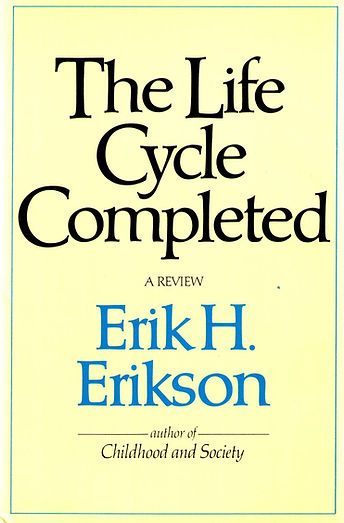
Erik H. Erikson
The Life Cycle Completed
In The Life Cycle Completed, Erik Erikson, with Joan Erikson, extends his famous eight-stage theory by adding a ninth stage, very old age. This final stage involves a reevaluation of all previous crises, emphasizing continued psychological growth and the potential for new insight even in the latest years of life. Erikson also argues that human development remains open-ended, and wisdom can emerge through reflecting on one's own entire life journey.

John Hausdoerffer, Brooke Parry Hecht, Melissa K. Nelson, and Katherine Kassouf Cummings
What Kind of Ancestor Do You Want to Be?
info@mysitThis book addresses a fundamental question: in an age of crisis, what legacy do we leave for future generations? Drawing on indigenous wisdom and ecological science, the authors argue that good ancestors through today's own mindful choices create a truly sustainable and flourishing future for seven generations yet to come.e.com

Ulla Aatsinki, Johanna Annola, Mervi Kaarninen
Families, Values, and the Transfer of Knowledge in Northern Societies, 1500-2000
This edited collection examines how Nordic families transferred cultural heritage, values, and knowledge across generations from 1500 to 2000. Using a "history from below" approach, it shows how conscious selection of knowledge contributed to family welfare. The book offers fresh perspectives on the history of education and upbringing within Northern societies over five centuries.

Erik H. Erikson
Childhood and Society
In Childhood and Society, Erik H. Erikson introduces his influential theory of psychosocial development across eight stages, from infancy to old age. He argues that at each stage, individuals face a core crisis whose successful resolution fosters a basic virtue and shapes identity. With a psychohistorical approach, Erikson explores how culture, society, and early relationships profoundly influence the formation of self and identity throughout the entire lifespan.

Ute Schönpflug
Cultural Transmission
Cultural Transmission by Ute Schönpflug examines how values, beliefs, and behaviors are passed across generations. She analyzes the roles of family, school, and social environment in this dynamic, bidirectional process. The book demonstrates that cultural transmission shapes both individual identity formation and the continuity of broader societal culture, emphasizing the active role of children in receiving and transforming cultural content.

Dan P. McAdams
The Stories We Live By: Personal Myths and the Making of the Self
In The Stories We Live By, Dan P. McAdams, the pioneer of narrative psychology, contends that human identity is not merely a set of stable personality traits. Instead, we unconsciously craft an internal life story to create coherence, purpose, and meaning. This evolving "personal myth" weaves together our remembered past, experienced present, and imagined future. It shapes our choices, relationships, and self‑understanding, ultimately directing the course of our lives.