


ENDURING LEGACIES
THAT WILL NEVER BE FORGOTTEN

Gérard Louis-Dreyfus, who served as the Chairman of Louis Dreyfus Energy Services across the United States and France, was one of the most formidable yet unassuming commodities traders of the late 20th century. His name was tied to billion-dollar deals that moved the lifeblood of global commerce, yet he remained a man of remarkable humility, speaking in measured whispers while examining every contract with the precision of a master watchmaker. In the full bloom of his career, after his fiftieth birthday, he felt an irresistible pull toward an entirely different domain. He began to spend long, solitary hours with a fountain pen and blank paper, finding in that simple ritual a peace that no record-breaking profit had ever afforded him. The cold language of spreadsheets gave way to something far more elusive, the language of memory and fleeting beauty. This was not an escape but a deliberate homecoming, a late-life pilgrimage toward a truth that all his wealth could neither purchase nor explain.
When he passed from this world, he left behind no sprawling autobiography or dense treatise on global markets. His literary legacy consisted of a slender volume of spare, exquisitely crafted poems, each written in his own elegant hand. In these minimalist verses, he did not write about oil futures or shipping margins. Instead, he turned his gaze toward the ordinary miracles he had once been too busy to notice, the arc of a seagull's wing, the steam curling from a morning cup of tea, the rain against a windowpane. His true estate, the inheritance he chose to bequeath, was never measured in dollars. It consisted of a mere handful of poems, perhaps no more than thirty, each composed slowly and revised until every syllable felt inevitable. These poems were his confession, his consolation, and his final testament, the distilled essence of a man who had held the world's resources but realized that the most precious resource of all is the courage to say something deeply honest before the silence reclaims everything.

Felix Dennis, who founded Dennis Publishing in the United Kingdom, built a vast fortune through magazines like Maxim and The Week, yet his true passion always belonged to verse. Despite commanding a media empire that stretched across continents and shaped popular culture for decades, he remained restless and fiercely creative, never content with commercial success alone. In his later years, he turned away from boardrooms and circulation figures to labor over poetry with the same raw intensity he had once applied to publishing. He wrote voraciously, often late into the night, producing several acclaimed collections that surprised critics and readers alike with their emotional depth and technical skill.
When he passed, he left behind no glossy pages or advertising revenues as his defining mark. His genuine legacy consisted of the raw, rhythmic language of a man who had spent his final years wrestling with mortality, beauty, and regret. These poems were not written for profit or prestige but as an act of defiance against the ephemeral nature of fame and fortune. He chose to be remembered not by the size of his wealth but by the sharpness of his words, by lines that cut straight to the human condition. Felix Dennis ultimately understood that magazines fade, but verse, when crafted with honesty, endures long after the publisher is gone.

Lu Hong, who founded the Holiland Bakery Group in China, rose from modest beginnings to become a self-made billionaire through his revolutionary approach to baking and retail. Yet beneath the surface of his commercial success lay a completely different devotion that consumed his private hours. He dedicated decades to capturing the world's vanishing wild places through his own camera lens, undertaking arduous expeditions across the savannas of Africa and the frozen expanses of the Arctic. These journeys were not brief vacations but grueling pilgrimages into extreme conditions, where he waited for hours in blinding cold or scorching heat for a single perfect frame.
His photography books, born from these relentless travels, reflect a quiet and profound reverence for nature that his business empire could never satisfy. Each image carries the weight of patience, solitude, and a deep awareness of impermanence, documenting landscapes and creatures that may soon disappear forever. When he finally steps away from the world, he leaves behind not the fortune amassed from countless loaves of bread and pastries. Instead, his true inheritance is a visual poem of the earth, a collection of frozen moments that speak more eloquently than any balance sheet. Lu Hong understood that dough rises and fades, but light captured with honesty endures as long as there are eyes to see it.

Scott Griffin, who founded Griffin Capital in Canada, built a successful investment firm through sharp instincts and disciplined strategy, yet he never sought to erect monuments to his own name. Instead of commissioning statues or naming buildings after himself, he turned his attention toward a field far removed from finance and quarterly returns. He founded the Griffin Poetry Prize, one of the most generous and respected awards for verse in the English-speaking world, but his contribution extends far beyond the prize's substantial purse. More importantly, he has been an active curator and advocate for the art, personally engaging with poets, attending readings, and nurturing a global community around the craft he deeply admires.
His legacy is not measured by the size of his fortune or the prestige of his corporate ventures. Rather, it lies in the quiet elevation of poetry itself, a discipline that thrives on vulnerability, precision, and truth, qualities rarely celebrated in boardrooms. He has tended this passion with personal devotion, reading manuscripts, corresponding with writers, and ensuring that the prize remains a beacon for emerging and established voices alike. Scott Griffin understood that capital can be accumulated and spent, but art, when supported with genuine care, takes root and outlives its patrons. He leaves behind not a financial empire, but a living tradition of verse that will continue to inspire long after the markets have forgotten his name.

Lamb, who served as the CEO of a family funeral business in the United States, spent years managing the solemn rituals of death and the quiet grief of countless families. His work was steady and profitable, a million-dollar enterprise built on tradition and trust, yet something vital remained unexpressed within him. After receiving a grave diagnosis that forced him to confront his own mortality, he made a radical decision that stunned everyone around him. He sold his company entirely and turned his full attention toward painting, abandoning security and expectation for the uncertain path of artistic creation.
In the years that followed, he produced a vast and vibrant body of work that captured the attention of major museums worldwide, earning exhibitions that celebrated his raw and unflinching vision. His canvases pulse with color, emotion, and a desperate beauty that can only emerge from someone who has stared directly into the abyss. His legacy is not a balance sheet filled with numbers or a family name passed down through generations of funeral homes. Instead, it is a canvas, a profound artistic testament born of personal transformation and hard-won honesty. Lamb understood that death takes everything eventually, but what we create in defiance of that truth, with our own hands and our own suffering, becomes immortal.

Sir Julien Cahn, who served as the Chairman of Cahn's Furniture Stores across the United Kingdom, amassed a considerable fortune through retail, yet he refused to be confined by the quiet life expected of a wealthy merchant. He did not simply fund a cricket team and watch from the comfort of a pavilion. Instead, he built his own squad from the ground up, captained it with genuine passion, and personally toured with his players across England and beyond. His XI became legendary, earning victories over county sides and even defeating national teams, a feat that astonished critics and delighted crowds wherever they played.
Beyond the cricket pitch, he also performed as an amateur magician, delighting audiences with tricks and illusions that revealed his playful and unconventional nature. He was a man who took nothing too seriously except the joy of participation, the thrill of creation, and the refusal to let wealth dull his sense of wonder. His enduring legacy is not the furniture stores that bore his name or the fortune he accumulated through years of commerce. It is the joyous, eccentric spirit of a man who played his own games on his own terms, who understood that life is too short for mere spectatorship. Sir Julien Cahn showed that true success lies not in what you own, but in what you actively, exuberantly, and lovingly create with your time on earth.

Ruben Feffer, an heir and former executive of Suzano Pulp and Paper in Brazil, grew up surrounded by the immense machinery of one of the world's largest paper producers. Yet he chose to turn from the weight of industry toward something far lighter and more ephemeral, the pure realm of sound. As an accomplished composer and multi-instrumentalist, he devoted himself to music with the same discipline his family applied to forestry and manufacturing. His work culminated in the Oscar-nominated score for the animated film Boy and the World, a masterpiece of layered melodies, playful rhythms, and deeply Brazilian textures that captured the hearts of audiences everywhere.
His music carries the spirit of his homeland, its vibrant streets, its quiet sorrows, its relentless joy, all woven together into something both simple and profound. He did not use his inheritance to purchase fame or secure prestige. Instead, he crafted each note with patient care, treating composition as a sacred and solitary craft. His legacy stands as a modest but indelible gift to the world, a body of work that speaks without words and moves without force. Ruben Feffer understood that paper fades and fortunes disperse, but sound, when shaped with honesty and love, lingers in the ear and the soul long after silence returns.

Yoshihara, who served as heir and director of Yoshihara Oil Manufacturing in Japan, managed a family cooking-oil company that supplied kitchens across the nation with essential goods. Yet his true energy was never spent on refining oils or expanding distribution networks. Instead, he poured his spirit into founding the Gutai Art Association, Japan's most radical and influential post-war avant-garde movement. As a self-taught painter and a devoted mentor, he gathered young artists around him, encouraging them to break every rule, to experiment with materials, performance, and the very definition of art itself.
He nurtured an entire generation of creators who would go on to reshape visual language across the globe, pushing boundaries that had seemed unshakable. His own paintings, raw and intuitive, reflected the same fearless conviction he demanded from his students. His legacy is not measured in barrels of cooking oil or corporate profits passed down through family lines. It is a revolution in visual expression, born not from commerce but from deep personal sacrifice and unwavering belief. Yoshihara understood that true art requires everything, comfort, reputation, and security, and he gave it all willingly, leaving behind not a company, but a flame that still burns in the work of those he inspired.

Gordon Getty, who served as heir and former director of Getty Oil in the United States, inherited one of the most staggering fortunes ever amassed through petroleum and natural resources. Yet he never allowed his wealth to define his purpose or distract him from his deepest calling. Instead of pursuing further corporate expansion or political influence, he quietly devoted his life to classical composition, a discipline demanding patience, discipline, and emotional honesty. Over decades of steady labor, he produced a substantial body of choral and orchestral works, performed by some of the leading ensembles in the world, surprising critics with their melodic richness and structural sophistication.
His music does not seek to impress or dominate. It flows with a gentle confidence, reflecting the inner peace of a man who found fulfillment far from boardrooms and balance sheets. His legacy is not refined petroleum or the sprawling holdings of his family name. It is refined sound, a catalog of compositions written entirely by his own hand, crafted for no reason other than the pure love of creation. Gordon Getty understood that oil fuels engines, but music fuels the human spirit. He chose to leave behind not a larger fortune, but a body of work that speaks directly to the heart, reminding us that the most valuable resources are those we cannot extract or sell.

Mann, who worked as a chartered accountant and insurance broker in Glasgow, spent his days balancing ledgers, calculating risks, and managing the financial affairs of others with quiet competence. Yet his true passion lay far beneath the polished floors of office buildings, deep in the soil of ancient landscapes. As an amateur archaeologist, he devoted his weekends and holidays to meticulous excavations across the Scottish countryside, carefully uncovering prehistoric artifacts that had lain undisturbed for millennia. He published his theories in scholarly journals, engaging with academics and fellow enthusiasts, always remaining humble about his contributions to a field he loved but never formally entered.
His work added small but genuine pieces to the vast puzzle of human history, fragments of pottery, tools, and bones that spoke of lives long forgotten. He never sought fame, professional recognition, or financial reward for his efforts. He excavated simply because he was driven by curiosity and a profound respect for those who came before him. His enduring gift is a quiet addition to human knowledge, earned through physical labour, patient study, and personal sacrifice, not purchased with wealth or inherited privilege. Mann understood that understanding the past requires no license or fortune, only steady hands, open eyes, and a heart willing to listen to stones and earth.

Gioia, who rose to the position of Corporate Vice President at General Foods in the United States, navigated the demanding world of packaged goods, marketing strategies, and quarterly targets with skill and determination. Yet his professional success never satisfied the deeper currents of his spirit. By night and on weekends, when the offices emptied and the calls ceased, he turned to poetry, a craft that demanded patience, precision, and emotional courage. Over the years, he produced influential essays and formally elegant verse that helped revive public interest in an art form many had dismissed as outdated or inaccessible, reaching readers far beyond academic circles.
His work brought poetry back into everyday conversation, reminding people that language, when shaped with care, can still move the heart and challenge the mind. He never used his corporate position to advance his literary career. Instead, he earned his place through decades of quiet discipline, writing in stolen hours and revising until each line felt true. He left behind not a branded product, a snack food, or a marketing campaign. His legacy is a literary revival, a renewed appreciation for verse that continues to ripple through culture. Gioia understood that food nourishes the body, but poetry nourishes the soul, and he gave his life to both, each in its own time and place.

Diehn, who made his fortune as an international potash magnate in the United States, built a commercial empire through the mining and distribution of essential agricultural fertilizers that fed nations and stabilized markets. Yet his wealth never became the center of his identity or the measure of his worth. In his later years, he turned away from boardrooms and commodity prices to devote himself entirely to musical composition, a discipline demanding patience, technical mastery, and emotional vulnerability. He created symphonies, a violin concerto, and numerous chamber works that were performed by orchestras and ensembles across the globe, surprising critics with their depth and lyrical beauty.
His music speaks of a man who had seen the vast machinery of industry and found greater wonder in the subtle interplay of instruments and silence. He did not compose for fame or financial return, but simply for the joy of creation and the challenge of expressing what numbers could never convey. His enduring gift is not a fortune in minerals or a corporate legacy passed down through generations. It is a body of music, crafted with care and performed with reverence, a quiet legacy earned through decades of dedication to a craft pursued for its own sake. Diehn understood that potash enriches soil, but music enriches the human spirit, and he gave the best of his later years to the one that truly matters.
Exploring the Enduring Legacy
Searching for the Enduring Legacy in Various Facets of Human Culture

A Legacy Cast in Art: A Historical Account of Renaissance Music Patrons
How Renaissance nobles turned their wealth into music that outlived them all, leaving behind not just fortunes, but a sonic legacy still heard today.

Three Immortalities in Chinese Culture (三不朽 sān bù xiǔ)
In 549 BCE, a Chinese minister redefined immortality: not bloodline, but virtue, merit, and words that time cannot erase.

Death Masks: An Answer to the Fear of Absolute Oblivion?
Far from a spell for immortality, the Roman death mask was a crafted response to a deeper terror: that of being utterly forgotten.

Moksha:
Immortality through Re‑cognition
What if immortality meant not living forever, but waking up to who you truly are? Moksha offers a radical journey from fear to freedom.
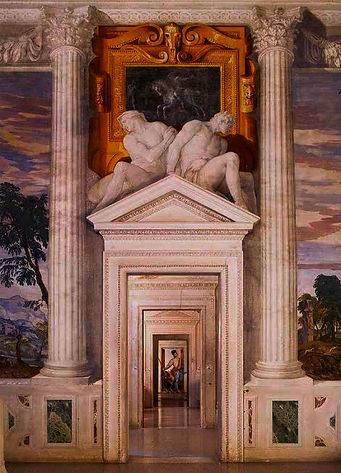
Villa di Maser; The Endurance of an Idea within the Frame of Architecture
In the hills of the Veneto, a patron's classical dream and an architect's genius converged to create Villa di Maser, a timeless icon where ideas outlive stone.

From Passive Hosting to Conscious Narration; Dawkins' Theory and Beyond
Beyond Dawkins' passive host, we become conscious narrators, shaping memes into lasting heritage through deliberate storytelling and transmission.

Cosmopolitanism and the Challenge of Transmitting Family Cultural Heritage to the Next Generation
Cultural identity faces new tests as families spread across borders, yet heritage endures through values, memory keepers, and reinvention.