


"A TRIP TO THE MOON"; CINEMA'S FIRST TRANSITION FROM TECHNICAL SCIENCE TO ART AND THE CREATION OF DEEPER EXPERIENCES
Introduction
Cinema Before Méliès: A Tool for Recording Reality
In December 1895, the Lumière brothers unveiled the Cinématographe in Paris. They themselves, however, regarded cinema as an "invention without a future" – a mere tool for recording and reproducing reality. Their one-minute films, such as "Workers Leaving the Lumière Factory," did nothing more than mechanically display an event. At this stage, cinema was a scientific-technical phenomenon, not an art form.
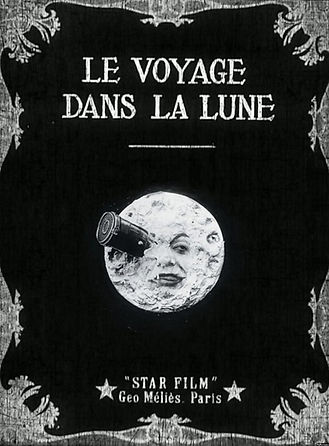
The transition from "recording" to "expression" and simultaneously from "information" to "experience" occurred in 1902 with the 14-minute film "A Trip to the Moon" (Le Voyage dans la Lune), directed by Georges Méliès. For the first time, this film demonstrated that the camera could conquer not merely a mirror of nature but also the realms of imagination, dreams, and narrative. Beyond that, it removed the viewer from the position of a mere observer and immersed them in an imaginary journey with sensory and emotional layers – something never experienced before in any medium in quite this way.
The 1902 Turning Point: The Birth of Narrative and Experience
How a Magician Transformed Cinema
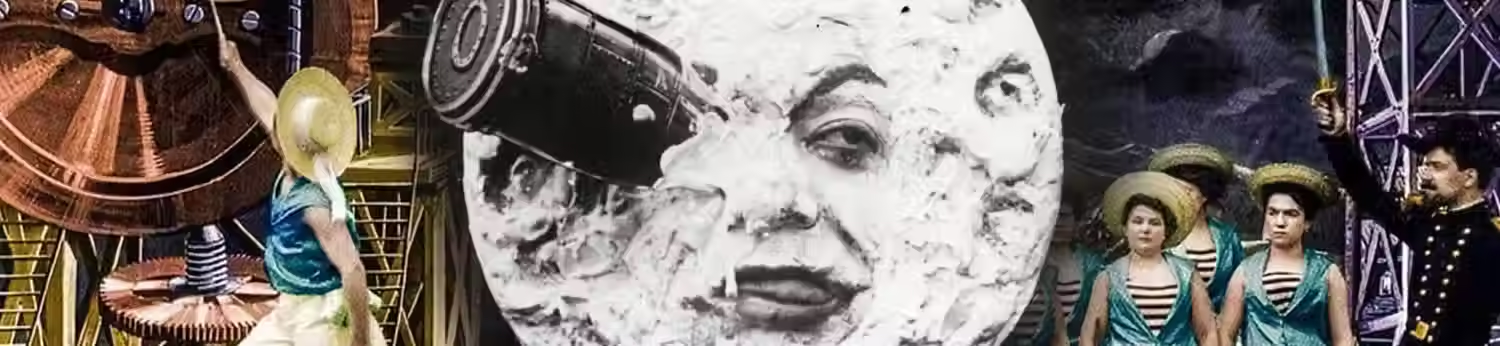
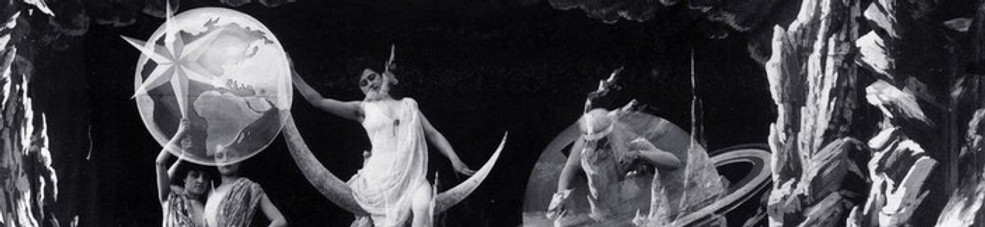
Méliès, a professional stage magician, used cinema not as a recording device but as a medium to create impossible worlds. Surreal scenes of landing on the Moon, encountering lunar beings (Selenites), and the rocket exploding in the Moon's eye were made possible through innovative special effects: stop-motion substitution, theatrical lighting, and handcrafted sets. This film was no longer a simple imitation of reality; instead, a new reality was created, one that immersed the viewer within it.
This film brought about three fundamental shifts:
-
Redefining the function of technology: The camera evolved from a documentation instrument into a storytelling tool. This was the leap that elevated a "technical device" into a "platform for creating meaning."
-
Creating an engaged audience: Viewers were no longer passive witnesses to everyday events; they entered an imaginary journey requiring interpretation, empathy, and emotional response. Thus, "experience" replaced "report."
-
Institutionalizing the artist's signature: Méliès was recognized not as a technician but as a creator. His name appeared on the film, he built his own studio, and he laid the foundations of the science-fiction genre. Cinema became a domain for individual innovation and personal style.
Three Fundamental Shifts in Technology, Audience, and Creator
From Representing the World to Creating Worlds
If the Lumières treated cinema as a "scientific report," Méliès transformed it into a "symphony of dreams" and simultaneously elevated it into a medium for creating experiences deeper than what a camera merely records. For this reason, many film historians consider "A Trip to the Moon" the first artistic film – not because of its technical perfection (which appears primitive by later standards), but because of the paradigm shift in how a medium is perceived: from representing the world to creating worlds, and from transmitting information to immersion in experience.